Showing posts with label Hollywood. Show all posts

Saturday, May 7, 2011

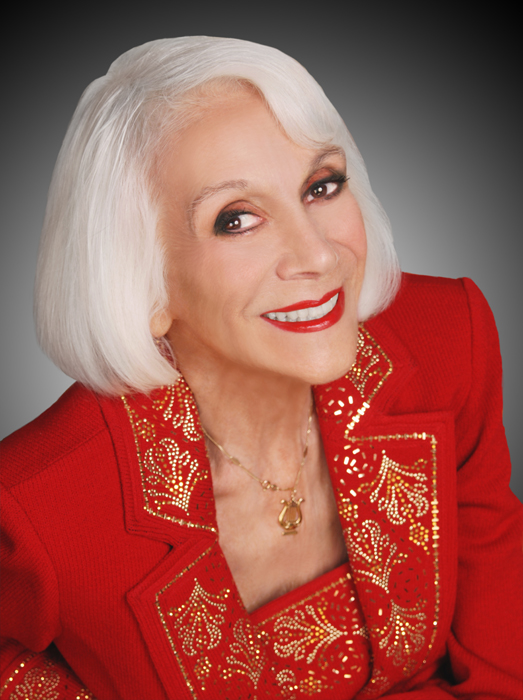
Monica Lewis: She's Hip!

All Photos: Alan Mercer  Lighitng:  Eric V.


One of the first realizations I had about Monica Lewis, after saying hello, was this lady is hip!  She spends time everyday on facebook after all.  How many other 89 year olds do that?  More than this, she is a progressive, open minded and spiritually aware thinker.  I fell in love with her immediately! 

For nearly two decades throughout the 1940's and 50's, Monica Lewis reigned as one of America's most popular songbirds, with a career that encompassed not only nightclubs and recordings, but also movies, theatres, radio and TV. An accomplished pop and jazz stylist, her blonde beauty graced magazine covers and her million dollar legs helped get U.S. troops through two of its greatest wars. She even enjoyed 14 years, between 1953 and 1967, as the singing cartoon voice of the popular advertising character known as Chiquita Banana!

Monica's rapid ascent to stardom began in the mid 1940's while still in her teens, with her own show on New York radio station WMCA. Monica also appeared in the very first episode of 'The Ed Sullivan Show,' in its initial run as 'Toast of the Town.' Her nightclub debut at the legendary 'Stork Club' led to appearances with Benny Goodman and a chance to alternate with Frank Sinatra on 'The Chesterfield Show.'

Her early recordings ranged from Gershwin, Kern and Coward favorites to such saucy items as 'I'm Gonna Be a Bad Girl' which she co -wrote and 'Put The Blame on Mame.'  Monica is among the very best singers of her generation.  Many of these recordings are available on CD and digital download. 

Monica's success brought her a movie contract with MGM as their new "threat" to Lana Turner. She romanced Victor Mature in 'Affair With a Stranger,' and danced with Gower Champion in 'Everything I Have Is Yours.'  She joined a roster of jazz stars including Louis Armstrong in 'The Strip' and sang to the marines in Jack Webb's 'The D.I.'  This is one of the best videos on Youtube where you can view Monica singing the Ray Coniff song (If 'n you don't) Somebody Else Will, one of my favorite of her performances.   

In 1957, at the height of her career, Monica temporarily gave it all up to become the wife of producer Jennings Lang but in the 1970's, she gradually began accepting occasional TV and movie offers, most notably in the blockbusters 'Earthquake,' 'Airport '77', 'Rollercoaster' and 'The Concorde: Airport '79.'  These films have a world following and Monica is a treasured star to the fans. 

In the 1980's and 90's, Monica made a few choice cabaret appearances and recorded several new albums, among them 'Never Let Me Go', another personal favorite of mine for her variation of style, 'My Favorite Things,' 'Monica Lewis Swings Jule Styne' and 'Why Did I Choose You?', a tribute to her 40-year marriage to Mr. Lang.  Monica's voice has matured into a real jazz inspired vocalist in these recordings. 

Eric Venturo and I went to Monica's home to take these photos celebrating the release of her new book "Hollywood Through My Eyes, The Lives & Loves of a Golden Age Siren" written with Dean Lamanna.  Monica was a joy both to photograph and when we visited afterwards. 


AM:  What a joy to be able to talk with you about your new book.  Is it a biography?

ML:  Yes it is.  It's my whole life.  I was born in 1922. 

AM:  Where were you born?

ML:  In Chicago.  I'm 89 and thank goodness I feel pretty good!  I've lived a lot of lives.  We have them listed by decades in the book.  I was a child when the great depression hit and people were jumping out of windows.  The struggle was enormous.  Of course I didn't realize all this at the time. 

AM:  What did your father do?

ML:  He was a composer and concert pianist and head of music at CBS in Chicago.  Things went bad because he made some bad investments and we were flat broke.  So we piled into our last possession, a Pierce Arrow, which would be like a Lexus today, and we drove to New York because my Dad had a brother who had a job.

AM:  How old were you when you left Chicago?

ML:  I was eleven and had my doll with me.  New York was our new home.  My older brother and sister both worked and brought home their earnings and put them on the table.  My Dad was getting assignments and my Mother who was an Opera singer was teaching voice lessons.  I couldn't get a job yet. 

AM:  How old were you when you were able to earn some money?

ML:  I was seventeen or eighteen. 

AM:  Were you singing for a living already?

ML:  I was in high school.

AM:  Did you do anything else to earn money?

ML:  Well I tried, but I never did anything else.  I tried to be a shoe model because I was tiny and had a four and a half B shoe.  They all said I was jail bait, so get out.  I've always been singing and dancing. 

AM:  What was your first break?

ML:  I was walking down the street with my Dad and we met an agent that he knew.  He told him, "My little girl is a singer."  The agent said, "If you say she can sing then I know she can."  He said I had to get some pictures to use as a head shot.  I didn't know what a head shot was.  I got the pictures and he booked me in Baltimore, Philadelphia and Boston.  My mama went with me.

AM:  So this is how you started a professional singing career?

ML:  Yes, it was so innate.  My family's religion was music.  We were all about music but I couldn't do the classics.  I didn't have my mother's power or range for opera.  I couldn't play the piano as good as my sister or play any instruments.  My brother could pick up any instrument and in five minutes he could play it.  My Dad was a genius.  My family was always on such a higher level but I found my own niche.


AM:  Did you have any musical influences?

ML:  I was very influenced by the jazz music I would hear on the radio like Ella Fitzgerald.  That was within my capabilities.  If you read my book you'll know that I finally got a job for five dollars a week doing a little radio show on Saturdays on WMCA in New York.  Then I got a call from Leonard Feather and he told me Benny Goodman was auditioning that afternoon.  Peggy Lee had eloped and he needed someone to take her place by that night.

AM:  What was the audition like?

ML:  It was a cattle call with three hundred girls.  My knees were shaking, but he said, "Kid come back at seven thirty tonight.  You're hired."

AM:  Did you work with him a long time?

ML:  I had a two week stint working with him.  He wanted to take me on tour but my folks said no.  Then I got a call from the Chesterfield cigarette people.  They had a radio show with Perry Como and Jo Stafford three nights a week and they wanted to buy the other two nights.  They wanted someone fresh for the other two nights.

AM: What was that show like for you?

ML:  We would introduce songs on the show that we thought would become hits and that always happened.   It was called 'Music That Satisfies' and it was on forever.  I became a national name. 

AM:  Did you get a recording contract from this?

ML:  I did, but the boy I was dating at the time started a record company with me called 'Signature Records' and it was all jazz.  I was the only middle of the road artist.  I was more about pop songs.  I was doing ballads and happy tunes but not pure jazz.  So I had my record contract and name recognition and then television happened.

AM:  How did you get into television?

ML:  I was working at the Lowes State Theater with Ed Sullivan, who hadn't become "ED SULLIVAN" yet.  He was a gossip columnist at this point.  My brother came to see me one night and Ed asked what he did.  I told him my brother was in advertising and he could help him a lot.  They got together and my brother said, "Why don't I devise a television show because television is where it's at right now."  Ed said he couldn't do anything and my brother told him it would be a variety show and everyone else will do the singing and dancing.  So the 'Ed Sullivan Show' was born and I was on the first show!

AM:  What year was this?

ML:  That was around 1948.  I was the first person they tested color television on.  I was the guinea pig for color.  From this time on my career was records and television. 

AM:  I love all the videos there are of you on Youtube.

ML:  I am a late comer to the internet.

AM:  It's rare that someone of your age embraces the internet.  It's great!!!

ML:  Well you have too!  I'm just a little slow with this.  There's no book!  My son Rocky makes me links to what I want.  I am getting better at understanding it all. 

AM:  I love how present you are.

ML:  When you have grandchildren you have to keep up, because even email isn't used as much, now we all talk to each other on Facebook. 

AM:  I love that you have a music page on Facebook for fans.

ML:  I have Monica Lewis and I'm also Monica Lang. 

AM:  The Monica Lang page is for people you really know right.

ML:  Yes and the music page is for fans.

AM:  I think we can get you some more fans!

ML:  That would be lovely!  Most of my personal friends are gone now.

AM:  How does it feel to outlive most of your friends?

ML:  Awful!  I find myself doing ridiculous things like checking the obituary page in the newspaper.  It's really sad.

AM:  How do you combat those feelings?

ML:  I have to keep my mind going with fresh things.  I involve myself with as much as I think is OK in my son's world and both my granddaughter's worlds.  I don't pry or anything like that.  I take great joy in their accomplishments.  They know Grandma is pretty proud of them. 

AM:  I know they are so proud of you too.

ML:  They like me. 

AM:  That's because you are likeable! 

ML:  You have to stay with it.   

AM:  Your album, 'Never Let Me Go' is so amazing.  It's more jazz.

ML:  That album was produced my stepson Mike Lang. 

AM:  All your music is so good and timeless.  Did you think it was time to write a book?

ML:  No I didn't.  I always wanted to write a book but I never did.  I started ten years ago and then I put it away.  My son had a book published and he told his publisher about me.  She called me and told me she found my life story fascinating and she had never published a book like this before.  This is what got me to write the book.

AM:  How long did it take?

ML:  Ten years ago my friend Dean Lamanna started collecting things on me.  The publisher made a deal with Dean to assist me.  He helped with the organization and how it would be laid out.  It is all my words.  He's a wonderful writer himself, so I really welcomed that.  We put it together from the very beginning to the various stages of radio, television, recordings, movies, marriage, political affiliations, people like the Kennedys who we were crazy about, and before that Ronald Reagan who I dated for two years.    

AM:  So it was a serious relationship with Mr. Reagan.

ML:  It was.  He got very serious and wanted to get married.  I really liked him a lot but I felt that it wasn't going to happen for me and that it wasn't the right thing.  Frankly I had met somebody who was an Irish, poetic type of guy and a screenwriter.  I was very drawn to him and I thought if I feel this way now then I cannot marry Ronnie. 

AM:  Did you love Ronald Reagan, but just not deep enough?

ML:  We were very compatible and there wasn't a bad thing I could think of to say about Ronnie.  He was the sweetest guy.  It was serious enough but something stopped me.  Whatever it was, it was the right decision.  I didn't even marry the guy that I was so madly in love with.  In the end I married Jennings Lang and I had the best wonderful marriage. 

AM:  What was the difference when you met Mr. Lang?

ML:  It was a whole other feeling.  It was the first time in my life when I felt I could rely on someone totally.  My family had always been very supportive.  Jennings was just a pillar of strength and humor.  He was so funny and witty and expansive.  He was larger than life.  He was thoroughly interested in the fine arts.  He created the television department at MCA which became Universal.  Later on he made thirty-three features. 

AM:  You are in some of them!

ML:  Little token parts.  He said I was a good luck charm.  We had a very exciting and fulfilling life.  Everybody said it wouldn't last two weeks and we were married forty years.  Jennings was the true mate for me. 

AM:  Tell me about the Chiquita Banana experience and how it came about.

ML:  It came during a period I was doing so much radio and television.  Somebody called me from the United Fruit Company and said they would like me to be the voice of Chiquita Banana.  They made a deal with me and it lasted fourteen years.  It paid my rent and it paid everything!  I spent a week doing the cartoons. 

AM:  I like how they made her sexy and cute like you.

ML:  Those cartoons are cute, sexy and fun!

AM:  Your sexiness comes from you being sweet.

ML:  That's why they were confused at MGM.  They didn't know how to use me in the right way.  They always wanted to groom me into someone else.  Lana Turner was pregnant and they wanted me to replace her.  Unfortunately Lana lost that baby so she came back to work and they didn't know what to do with me.  If I had been there five years before I would have had a shot at real movie stardom, but I wasn't and that's life. 

AM:  You have had a fun life haven't you?

ML:  You have to make your life fun.  Fun doesn't just come to you.

AM:  Do you think it's all attitude?

ML:  I do.  I think you need to make each day count.  If you're a runner then enjoy the run.  If you're a gardener then enjoy the roses!  If you have to be at work on time be glad you're going to work!  Don't spend your life complaining about everything because it makes you sick. 

AM:  No wonder your family adores you!  It seems you have skipped the traps of getting lonely and unhappy.

ML:  I do get lonely and it's in the wrong hours.  I watch a lot of television and lots of reruns of things I've seen seven times.  It's OK and I finally fall asleep.  Fortunately I don't require a lot of sleep.  If I sleep six hours it's a good night's sleep.  

AM:  As long as you feel good!

ML:  I wake up feeling OK.  Sometimes I get tired in the afternoon if I over exert myself. 

AM:  Do you still sing for fun?

ML:  Yes! 

AM:  When did you last sing professionally?

ML:  I recorded a tribute album to my life with Jennings after he died in 1996. 

AM:  Was it emotional for you to sing this?

ML:  Yes, but I felt OK about it.  It's what I wanted to do. 

AM:  Did you go through a therapy when you were writing your book?

ML:  I enjoyed it very much.  I enjoyed the process and having to think.  I enjoyed having to remember everything.  That was very good for me.  The hard part was I didn't have anyone my age to bounce it off of who might have seen some of the same things.  Dean is a great researcher and if I was slightly in doubt, he would research it.  We have a section in the book about when I went to Korea to entertain the troops with Danny Kaye. 

AM:  How long were you there?

ML:  Three weeks.  It was hard in every way possible.  I washed my hair in a helmet.  We put on a great show going from one battalion to another.  There was four of us.

AM:  What was the scariest  thing you went through?

ML:  One night we were five miles from the Chinese line and they were battling.  The noise was infernal.  We were all very frightened.  We didn't sleep at all that night.  We sat up and had a bottle of scotch.  We all took two or three nips, huddled close together and kept singing all night. 

AM:  I think my favorite album of yours is called "Sing it To The Marines.'

ML:  That's the best I ever sang.  I just found out I was pregnant.  I was the happiest person in the world.  The arrangements on that album are incredible.  The orchestra was magnificent too. 

AM:  Was it a big seller?

ML:  Yes, it did really well. 

AM:  Are you the first artist that recorded 'Put The Blame On Mame?'

ML:  I think so.  That's when Bob Hope called me and wanted me to be on his show with Desi Arnez.  Rita Hayworth sang it in 'Gilda' but she didn't really sing it.  I wouldn't dub for anyone.  Rita was great in the picture and it has a cult following now.  I met Rita much later.  She was so nice.  I had lunch at her house. 

AM:  You are going out to promote your book a little bit aren't you?

ML:  I'm doing as much as I can.  I'm signing at 'Book Soup' in Hollywood in June and I'm doing the 'Hollywood Show' in July. 

AM:  Who influenced you musically besides Ella?

ML:  In my day all of us felt the source was Ella.  We couldn't compete.  There were other singers like Sarah Vaughn.  As time went along other people like Barbra Streisand came along.  She has a gorgeous voice.  I like a lot of different music.  I don't understand a lot of the music today. 

AM:  Do you still do vocal exercises?

ML:  A couple times a week I do. 

AM:  Thank you for spending some time with us. Your music has given me and so many others a lot of joy for so long! 

ML:  I feel very good talking to you.  I'm one of those people who says enjoy every minute.  When you look back...the best things in life are what you did for somebody else.  It's the truth. 


To learn more about Monica Lewis visit her web site www.monicalewis.com 

Sunday, October 4, 2009

The Legendary Rona Barrett


Photos: Alan Mercer Lighting: Eric Venturo

Rona Barrett is a legendary columnist, television pioneer, and successful businesswoman. She currently runs the 'Rona Barrett Foundation,' a non-profit organization in Santa Ynez, California dedicated to the aid and support of senior citizens in need.


Born to a Jewish family in New York, New York, Rona was diagnosed with a rare form of muscular dystrophy at age 9. When she was 13, she became the nationwide coordinator of singer Eddie Fisher's fan clubs. Her date for the high school prom was singer Steve Lawrence. She thought about being a doctor but, majored in pre-law at college, until her uncle, a judge, advised her to switch to journalism.

Barrett became a gossip columnist for the Bell-McClure newspaper syndicate in 1957. In 1966, she began broadcasting Hollywood gossip on the Los Angeles television station KABC-TV. She appeared on TV regularly, going on to appear on ABC's five owned and operated stations around the country. WABC-TV in New York put her pre-recorded gossip segment into its nightly local news.

She developed the first in-depth personal TV Specials about the celebrities of motion pictures, television, music, sports and politics, and had a series of magazines on the entertainment industry that were top-rated at newsstands, including Rona Barrett's Hollywood.


Barrett began appearing on Good Morning America in 1975. In 1986, she bought a ranch in Santa Ynez, California, and began commuting back and forth to Los Angeles. In 1991, she retired full time to her ranch.

This past February Rona returned to the spotlight with the release of the DVD 'Rona Barrett's Hollywood,' a collection of interviews done some thirty-five years ago. I remember those interviews, when I was very young, like they were yesterday. I always loved Rona Barrett.....and her magazines. I remember the first time I ever saw her on television and how I enjoyed reading her autobiography 'Miss Rona' when it was published in 1974! It is safe to say that Rona Barrett was a major influence on my life.

She is now preparing to visit Palm Springs to be honored with a Star on the Walk of Fame, this Friday, Oct. 9, one day after her birthday! Having the chance to sit in her home and talk about her career and life, after Eric Venturo and I took her new publicity photographs, was a real treat.

AM: Miss Rona I must tell you what an honor it is to be able to work with you. I never thought I would have this opportunity. This is really a dream come true.

RB: You know what Alan, I have always believed that you have to go after what you really want. Just make sure you want it because once you get it you can't go back and say, "Oh I don't like this." So you wished this and your wish has come true and it is my pleasure to be with someone who knows how to take nice pictures!

EV: Are you excited about your Walk of Fame Star in Palm Springs?

RB: I couldn't have been more surprised, and perhaps a better word would be shocked, when a friend of mine, who is totally responsible for telling the people in Palm Springs that they should have a star for me. He is a young man named Tony Morris, who like you, sent me a letter way back in the early 70's asking my opinion on how to become a film critic. I wrote him back and apparently he kept the letter and still has it to this very day.

AM: I assume you have met in person by now?

RB: I had the chance to meet him in San Francisco and he showed me the letter. He told me, 'You have no idea how much you mean to me and how you have inspired me.' It sounds a lot like Alan Mercer. I was very flattered. I asked if I could read it and he let me. I said, 'You know what, I would give you the same advice today as I did back then.' So began a new friendship. Anyway he vacations in Palm Springs and said Rona Barrett has to have a star. A few months ago I got a letter telling me they were giving me a star.

EV: That must have been exciting.

RB: I had to read the letter twice. Then Tony called me and asked if I got a letter and I said yes. How did you know? He wouldn't say anything but I later found out, being the reporter that I am, that Tony was largely responsible for it.

AM: It's appropriate for you to have a star there.

RB: I used to live in the dessert the entire time I had a career up until about seventeen years ago.

AM: Can you talk about your charity work?

RB: We are having a crisis in so many areas of this country and the people who seem to be getting hit the most are seniors. Seniors really are the people who do not have the funds to buy insurance and get the health care they need. I'm talking about the elderly poor. Seniors are the first, along with children, to get attacked by any crisis. Then they are eliminated. 'We can get rid of the elderly. They don't really vote and their vote doesn't count anyway. Children can't vote so we never have to worry about them,' say the politicians.

AM: Have you always been involved with charity work?

RB: I've been involved with charitable work for a long time, mainly with children's diseases until my father came to live with me after my Mother passed away. Suddenly I realized that it was the elderly who need the most help now. No one is speaking up for them. Indirectly I became a voice for seniors in this part of the country. My message is getting out slowly but surely across the country that we cannot forget those who helped make us who we are today but can no longer take care of themselves.

AM: I couldn't agree more. I'm heading towards those years myself.

RB: We all are. We all have parents. We all have friends who are older than we are. This is not just a happening thing. It was inevitable and it drives me crazy that for more than fifty years this country knew we were going to be facing this crisis when the baby boomers reached sixty-five. A lot of them would never be prepared for living longer, not necessarily better, and then not having the funds to live out whatever kind of life they have. The crisis that has hit this country in the last couple of years has really hit the elderly more severely than any other group.

EV: What do you think is the worst problem?

RB: We don't have enough housing or hospital beds. It's a very serious problem. I hate seeing pictures on the news where they let an elderly person out of a taxi cab because they have no more insurance to pay for the hospital. You say to yourself, 'How can anybody do that? How can you drop off someone who is infirmed in downtown Los Angeles?' I am absolutely appalled.

EV: When did you start getting involved in this?

RB: I decided since 2000 that I was going to do something about it. I have a brand new hybrid program, that I am trying to get off the ground as a pilot program starting in Santa Ynez Valley. If the program works it can be duplicated all over the country. I am hoping that this will be the beginning of people seriously thinking about how to give people the care they need, especially the elderly. That's my job.

AM: What do you think about the Universal Health plan most of the world has except us?

RB: Well I think they attacked it from the wrong point of view. That is my current belief. I may have my mind changed again. I think everybody should be covered, but having traveled to several countries around the world where they have Universal coverage, I regret to say, other than in Finland, which only has a couple million people, it is the only country that can handle Universal care. Every other country that has it, has problems and it doesn't always work.

AM: I have heard that before, but what do we do?

RB: I'm at a loss because I think we haven't attacked this problem from the right point of view. It isn't just getting all of us insured, it's how are we going to deliver the service and what kind of service? What are the services we should give to people and guarantee? I believe more in preventative medicine. I also happen to believe in alternative medicine. Therefore I think if we can become a healthier nation we would be much better off and that's what most people don't understand.

AM: Why do you think it is so hard to get this message out?

RB: People are so set in their ways of thinking, especially the elderly. They have lived for seventy or eighty years with a certain way of living their life and their expectations. They are afraid of change. People are afraid of change. Most people don't even know how to move to the next step in life. Once they hit the first obstacle in the road they just stop. With that they turn around and we end up with a lot of frustrated people in this country who are doing things they don't want to be doing. They are forced to do what they have to do.

AM: It seems to be most people.

RB: I understand that it is wonderful to be an achiever and to have a type A personality, but not everyone can be an A personality. Therefore, in order to make up a whole entire group and have the kind of democracy we thought we were getting, you have to have a middle class. You have to have an industrialized nation. We cannot be just a service nation. Those are my personal and political views at the moment. When I can get more accurate information they may change. I don't feel we are getting accurate information. That's the problem. You can be told the truth but the truth isn't necessarily accurate.

AM: I'm glad you are doing what you can to help.

RB: I'm a firm believer that what is meant to be will be. I also believe I was led into this path.

AM: What personality trait gave you an advantage at the beginning of your career?

RB: A belief that I had to make something of my life. I knew consciously and subconsciously that my parents only wanted the best for me, but they never knew beyond what they already knew. I felt there was something bigger and better out there. They were afraid that because I was born with a physical handicap that I wouldn't be able to survive. All they wanted to do was protect me. I knew I could not be a physical cripple and a mental cripple at the same time so I made up my mind that I was going to be someone.

AM: How did that physical setback affect you?

RB: Honestly Alan I think the physical setback really gave me the impetus and was responsible for me wanting to make something of myself. No child likes to hear someone call them a cripple. No child likes to hear anything bad said about them. Children, for reasons I will never understand, can be very cruel. I think they hear their parents say things 'on the fly' like, 'Did you see that cripple?' Right away the child has an image of a cripple and the way the parent said it is what sets the tone of it possibly having a negative impact, as opposed to a positive impact. Those things certainly happened to me and I thought if I became someone famous and well known that nobody would ever dare say a bad word about me. ( we are all laughing)

AM: It's really just the opposite.

RB: Sweetheart, what a life I chose for myself!

AM: What did you think of Luella Parsons and Hedda Hopper and how did you want to be different?

RB: Like everyone I grew up reading these ladies, but I really was reading Walter Winchell and Dorothy Kilgallen. It was Dorothy's coverage of murder trials that got me intrigued. I thought, what an exciting life to cover a murder trial! Of course Walter seemed to know everything before anybody else. How would it be to know everything before somebody else? Somehow the idea that I would be a journalist was born in my head.

EV: Did you ever think of doing something else for a living?

RB: I had seriously thought of becoming a doctor of research to find out why I had been born with this physical weakness in my muscles that prevented me from running and skipping and going up a flight of stairs. When I saw famous people on the screen they seemed to have such a wonderful and fabulous life (more laughing). What did I know until I went inside the inner sanctum of that wonderful world known as Hollywood.

AM: Do you still have an interest in Hollywood life today as a reporter or spectator?

RB: More as a spectator. I often think of what Walter Cronkite said when he was asked what it felt like to be retired. He said, 'I feel like a fireman who hears the bell ringing. I jump on the pole and slide down. I grab my yellow slicker. I go to put on my hat and open the front door and I realize I have no fire engine!'

AM: Are there stories today you wish you were working on?

RB: Every now and then there is a story that happens and I say I know how to do this one. I know where the bodies are buried and I know where to get the information, and I know how to do this, and I would love to sink my teeth into this story, and then suddenly I say, 'Hey wait a minute girl. You are the one who quit. You are the one who said one morning I've had it.' I cannot say one more time that Robert Redford was going to get 20 million dollars or somebody was going to get fired from CBS. I just can't do this anymore.

AM: Was it a sudden change?

RB: Little incidents occurred along the way that made it very clear to me that times were changing. If you wanted to say anything controversial there were executives in charge of everything and did not like any controversy. The winter of my years was coming and I could tell. I didn't know when it would happen but I will tell you this, the day CBS gave Dan Rather the job of being Evening Anchor and did not give it to Roger Mudd, who had been the loyal guy, I knew that the day of belonging to a corporation and having them be there for you was over. I said I don't want this to happen to me and that as it.

AM: What has changed the most about the entertainment business?

RB: I think money is more important today than it has ever been, but it's always been important. Money has been at the root of everything. When cable and satellite came along you could see that everyone was nervous. When DVD's came along there was all these new methods of distribution that we never knew before. People started getting nervous about where the funds were going to come from.

AM: I want to talk about your new DVD of your classic interviews. I remember when they aired originally like it was yesterday.

RB: When I was looking over the first group of interviews that I owned because they were done through my company, I was in shock. I couldn't believe it had been almost forty years since I sat down with Cher on her bed! She was very open and honest. Whatever she was thinking at that time in her life she said. That's the way she has always been as far as I'm concerned.

AM: How did you know what to ask?

RB: I only asked questions that I really wanted to know the answers to. I was curious. I wanted to know am I anything like these people? Are they anything like me? What do they really think? What happened the first time a woman went to bed with some guy? I asked the questions.

AM: Does anyone's answer stand out in your memory?

RB: The one that remains in my head was Raquel Welch saying, 'Rona! You can't ask me that!' and I thought, 'why not?' I'll be happy to answer that question. Raquel ultimately told me that by eleven years old she was aware of her sexuality and for her this would be a way to pull herself up the ladder. It took at least six months to get Raquel to agree to the interview. I wanted to do something different and not do an interview about her latest movie but all about her.

AM: Was it hard to pick the first four people?

RB: I chose the four hottest women at the time and we got a 44 share in the ratings. That doesn't happen anymore.

AM: All four of those women are still relevant and very famous.

RB: They never went away. I chose Raquel, Cher, Liza Minelli and Ann-Margret.
The next interview special I did had Carol Burnett talking for the very first time about growing up in an alcoholic family. At the time I did these interviews these subject matters had never been discussed. At the time they really were ground breaking.

EV: What do you think of contemporary media outlets like TMZ?

RB: I've known Harvey Levin for many years. I would say he is in a very good position to know who all the lawyers, judges and police departments to give him information. I think that during the Michael Jackson tragedy his sources came through for him and he was able to do some very good reporting. Other than that he focuses on the most trivial things to put on the air. I just don't understand it.

AM: How did your magazines get started?

RB: They started in 1969. With the success that I was building on television it was thought that I would do well with a magazine called 'Rona Barrett's Hollywood.' I said, 'OK let's try it.' I wanted to focus on young Hollywood at the time. I wanted it to be similar to what I was reporting on TV. The tone was in keeping with something new and different and put all the other magazines out of business.

AM: Your magazine was more like 'People' magazine.

RB: It was more like that. My first issue of 'Rona Barrett's Hollywood' came out one year and one month ahead of 'People.' We knew about "People' magazine coming out and I said to my partners I think we should seriously consider doing a weekly. They said to me to give them more time. It was a mistake because I think we could have gone head to head, just as I was begging ABC to let me go head to head with '60 Minutes' and after creating a show that was eventually called "20/20' where everyone I suggested for that show went on to be in it except me. That was a very serious and difficult moment in my career. It was the beginning of how I began to change my thinking in a lot of ways.

AM: Did you choose to end the publication of the magazines?

RB: In many ways I chose to end them because I desperately wanted to be considered a real news person by the news departments. It was long before any of this so because I was a woman I could not be known as a columnist, but a gossip columnist. There was no room for gossip on the evening news. That's when I said I have to extricate myself from these magazines in order to be taken seriously. It was one of the biggest mistakes I've ever made. You know I created 'Entertainment Tonight.' It wasn't called that at the time, but it was the same show. I was on 'Good Morning America' and everything I reported on that show was on "Entertainment Tonight.' They told me I couldn't do it so two of my friends presented it to Paramount as a syndicated show and the rest is history.

AM: How did you handle the sexism?

RB: When you are going through it you don't realize you are going through it. I was unaware how I was being affected by being a woman. I never got the same pay as any man. I had to fight harder battles. I thought everybody fought battles. It was never ending. All I can tell you is that in the final analysis I applaud Barbara Walters. She has been able to stick it out and want to do it. I, on the other hand, said that's it. I have fought a good battle and I cannot do it anymore. I had lost the 20/20, I had lost 'ET', I had lost the weekly publication I wanted. I thought maybe God has something better for me to do than this and I don't know it. I went into a ten year hibernation.

AM: You wanted to have a human life.

RB: I needed to take care of myself and I needed to take care of my first husband, who has since passed away. Those things became far more important to me. My priorities shifted.

AM: Were you aware that you were making television history?

RB: No I wasn't aware. I didn't think abut it until after people were saying that to me.

AM: Now you are recognized as a Television pioneer and I think that is pretty amazing considering it wasn't 1949!

RB: Absolutely. People used to say to me at one point, 'How does it feel to be so powerful?' I would look at them and say, 'What are you talking about?' The minute I got off the air I would worry about where my next big story was coming from. I could never think about something like that. It was 24/7 always thinking about the next story and how I was going to get it. I did have good intuition and I would think about someone and call them and inevitably there would be the beginnings of a story. I started to listen to my inner self even though I would fight with my inner self all the time. I was my own worst enemy.

AM: How did you "gossip" and still retain a high standard of respect from the people you reported on?

RB: You know what I discovered? The truth often hurts more than a lie. When you tell the truth, it is that which gets people annoyed and angry. Overall when people sat down to have a conversation with me I was always interested in what they had to say. I was always curious. I have been and still am today about what really makes people tick. Who are they? What do they think about? What do they do in the privacy of their own thoughts?

AM: You have an interest in psychology.

RB: I have always had a psychological bent. It was always a favorite subject of mine. I was always interested in the way things happened. How did it happen? Why did it happen? What prompted it to happen? When did the epiphany occur? I would never ask a question that I wouldn't answer myself. That's the difference. I believe that's what it was really all about. Sometimes people couldn't believe they told me all they had. They would see it played back on television and not believe what they said. I was even accused of editing tapes to appear like someone said something they didn't.

AM: Did it hurt any friendships you had at the time?

RB: Well it taught me a lesson and the lesson was, it is better not to have 'Stars' as your best friends. It is much better to do the job that you have to do and keep them at arms length. Build all the sources you can build. Get to know who can tell you things and then go to somebody and verify it. It was also the tone I gave the story. I was never afraid to say I'm sorry I have made a terrible mistake. I remember saying that very clearly when Patty Duke won an Emmy. We didn't know she had real mental problems and she was making a spectacle of herself every night. When I found out that's what was going on in her life I needed to apologize. I announced it on TV when she won her Emmy.

AM: I see what you mean.

RB: I learned to keep all of these people at arms length. I realized that being best friends would make me a lot of enemies and I could not do that. It was difficult to have close friends because it would be too hard to write about them. It defeated the purpose of wanting to be really good at what I did. That's my story Morning Glory!


To learn more about Rona Barrett visit her web site http://www.ronabarrettfoundation.org/

Monday, December 17, 2007

The Echo's Iza Calzado Interview

Filipina actress Iza Calzado, starring in her first American movie The Echo with Jesse Bradford, shares her Hollywood experience.


Iza Calzado interview in Manila about The Echo


Iza Calzado interview in Manila about leaving for Canada

Friday, November 2, 2007

The Echo's Iza Calzado Sexy Pics

Prints from new photo shoot of Hollywood actress Iza Calzado, who's starring in the upcoming movie The Echo with Jesse Bradford. This is an achievement for Iza in itself, because we're always so used to seeing her look like such a geeky goody goody girl, so when she actually looks hot like this, it's a treat for everybody, not a trick, hehe.

Photographer: David Fabros
Stylist: Luis Espiritu


Tuesday, October 30, 2007

A Filipino meets Ugly Betty

A Filipino friend of ours with the cast of ABC's hit TV show Ugly Betty. Happy Halloween! Watch full episodes FREE of Ugly Betty online now! Filipino actor Eric Mapa is also a member of the cast of Ugly Betty, you can catch him in the season 2 premiere and in following episodes. Go Pinoy!

Thursday, October 25, 2007

The Echo ready for release

Filipina actress Marian Rivera transforms into Bella Aldama, the beautiful, upper high class society lady and alter-ego of Marimar in the #1 rated show in the Philippines of the same name with Marvin Agustin entering the telenovela to stur things up in the relationship between Marimar and Sergio, as Filipino actor Richard Gutierrez signs an exclusive contract with GMA Films. Click on the links below to watch exclusive video clips and interviews from Marian Rivera, Richard Gutierrez, and direk Joyce Bernal talking about Marimar's transformation.
Meanwhile, the filming for the American remake of Sigaw has finished, and Filipino director Yam Laranas was in the studio with his editors and has just finished editing the film for theatrical release, all the way to the final frame. It's coming, guys! More updates here as we here them from Direk Yam, and I'm here in Los Angeles for a while, so you know that when the film has it's grand theatrical release, I'm definitely gonna drive down to Hollywood with my friends to see the stars walk down that red carpet, and hopefully I'll take lots of photos and post them here for you guys.

Exclusive pics from director Yam Laranas:


Sunday, October 21, 2007

Chad Hugo with Ashlee Simpson

Filipino music producer Chad Hugo, is currently working with American pop artist Ashlee Simpson, sister of Jessica Simpson, on a new album.

Ashlee Simpson was partying Saturday night at Les Deux in L.A. and went home with Chad Hugo, friends said. “She tried to pick up Ryan Phillipe, but he wasn’t interested. So then she hung out with Chad all night and left with him.”

Monday, October 8, 2007

The Echo exclusive photos

Exclusive pictures of Jesse Bradford, Iza Calzado, Carlos Leon, and New York City in the Hollywood remake of the Filipino thriller Sigaw, straight from Yam Laranas, the director of the film, himself. It looks like the movie is coming along well, and the movie should be out by next year.


Sunday, October 7, 2007

Lea Salonga in Les Miserables

Lea Salonga, whose recent triumphant return to Broadway in Les Miserables has sparked such a great interest from the public in New York City that the show has been extended from it's original May 2007 all the way to March 2008, recently guest starred on PhilMusic.com's podcast. The Tony-award winning Filipina actress was visiting Manila for a two-week vacation from her regular Broadway gig, playing Fantine in the current revival of Les Miserables. Lea and her husband turn out to be huge fans of the OPM band scene! She talks about bands they're into like Imago, the Dawn, Sandwich, Cambio, Bamboo, and Paramita. She also gives us a peek into how she prepares for performances and recordings, and her near-telepathic musical connection with her brother, arranger/conductor Gerard Salonga. Finally, she offers inspiring tips for up and coming musicians who want to make it in the business.

Listen to the interview.
Lea Salonga looking stunning at her album release party at Carnegie Hall.

Gael Garcia Bernal in Manila

Mexican actor Gael Garcia Bernal will come to the Philippines to shoot a portion of his new movie Mammoth. A source tells PEP that a famous Spanish film group will film a movie starring Gael in Manila this December .

Gael topbills Mammoth, an English language debut of Swedish director Lukas Moodysson. The movie is a domestic drama about a young couple, their child and their Filipino nanny, played by actress Marife Necisito---who appeared on indie films Ebolusyon ng Isang Pamilyang Pilipino (1994) and Pandanggo (2006).

Gael's role is a successful New York-based IT (Information Technology) tycoon who decides to radically change his life while on a trip to Thailand with his wife and daughter.

Website Variety.com says the 10 million dollar production will begin filming on November in Thailand, New York, Sweden, and Philippines.
pep.ph

Friday, October 5, 2007

Filipino singer Enrique Iglesias

Filipino singer Enrique Iglesias is back on the top of the charts with his latest album Insomniac and with a Top 5 Single "Do You Know".

“Though I was born in Madrid, my being a Filipino is very strong in me,” says Enrique. “When I was growing up, my mom (Isabel Preysler) would always talk about the Philippines. She taught us the things that are very important to Filipino culture such as family, being hospitable to guests, and fear of God. I even remember the Filipino dishes she used to whip up.” - Manila Standard, March 18, 2004

Related Post:
Enrique Iglesias Talks About Being Filipino


"I think it must be harder to be female than male. Apart from having to deal with period pains, pregnancy and child birth, I think women are more emotional than men. It's not just that they find it easier to talk about emotions, I think they actually feel emotions more deeply."

"I'm as comfortable with women as I am with men. Of my closest friends, three are men and two are women.

"I learned a lot about women from my mother and my nanny, but I don't think you really get to know what makes women tick until you have a romantic relationship."

"Like most men, I'm not very good at romantic gestures."

Enrique Iglesias - Do You Know (The Ping Pong Song)


FREE HOT VIDEO 1 | HOT GIRL GALERRY 1

FREE HOT VIDEO 2 | HOT GIRL GALERRY 2

FREE HOT VIDEO 3 | HOT GIRL GALERRY 3

FREE HOT VIDEO 4 | HOT GIRL GALERRY 4

FREE HOT VIDEO 5 | HOT GIRL GALERRY 5

FREE HOT VIDEO 6 | HOT GIRL GALERRY 6

FREE HOT VIDEO 7 | HOT GIRL GALERRY 7

FREE HOT VIDEO 8 | HOT GIRL GALERRY 8

FREE HOT VIDEO 9 | HOT GIRL GALERRY 9

FREE HOT VIDEO 10 | HOT GIRL GALERRY 10

FREE HOT VIDEO 11 | HOT GIRL GALERRY 11